

Step-by-Step Guide to Canadian Work Permits for Vietnamese Professionals
Canada continues to attract skilled professionals from Vietnam with its strong economy, diverse workforce, and opportunities for career growth. Whether you're an engineer, IT specialist, accountant, healthcare worker, chef, or skilled tradesperson, obtaining the correct work permit is one of the most important steps toward working legally in Canada.
This guide explains the Canadian work permit process in simple terms so Vietnamese professionals can better understand what to expect.
Disclaimer: Immigration policies and eligibility requirements can change. This article is for general information only and should not be considered legal advice.

Step 1: Determine Which Work Permit You Need
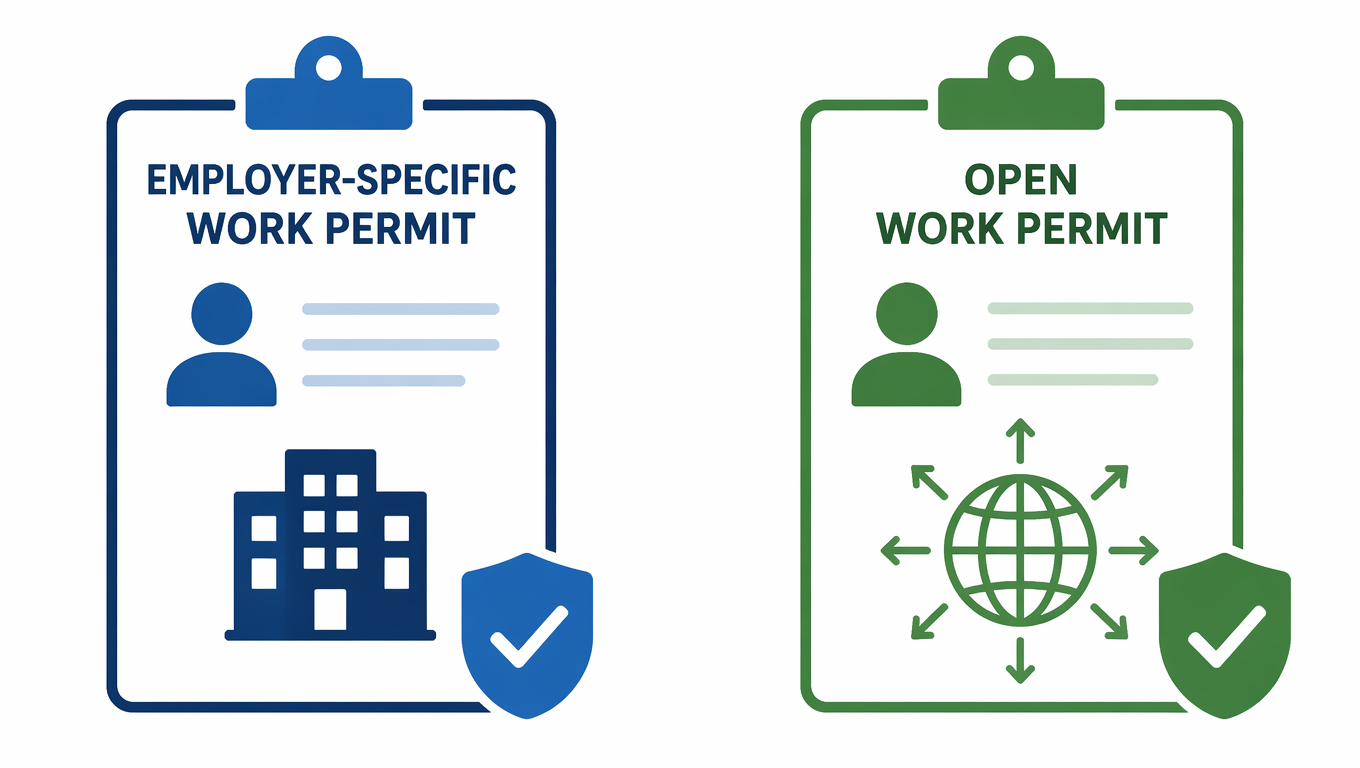
Canada primarily offers two types of work permits:
1. Employer-Specific Work Permit
This is the most common type of work permit. It allows you to work only for the employer listed on your permit, under the specified occupation and location. In many cases, your employer must obtain a Labour Market Impact Assessment (LMIA) before you apply, although some jobs are LMIA-exempt.
2. Open Work Permit
An open work permit allows eligible individuals to work for most employers in Canada without being tied to a specific company. However, only certain applicants qualify, such as those under specific immigration programs or family-based categories.
Step 2: Secure a Valid Job Offer (If Required)
For most employer-specific work permits, you'll need a genuine job offer from a Canadian employer.
Depending on the position, the employer may also need to:
Apply for a Labour Market Impact Assessment (LMIA)
Demonstrate that they were unable to find a Canadian citizen or permanent resident to fill the position
Provide supporting documents for your application if an LMIA is approved
Not every job requires an LMIA. Some positions qualify for LMIA exemptions under international agreements or other government programs.
Step 3: Prepare Your Documents
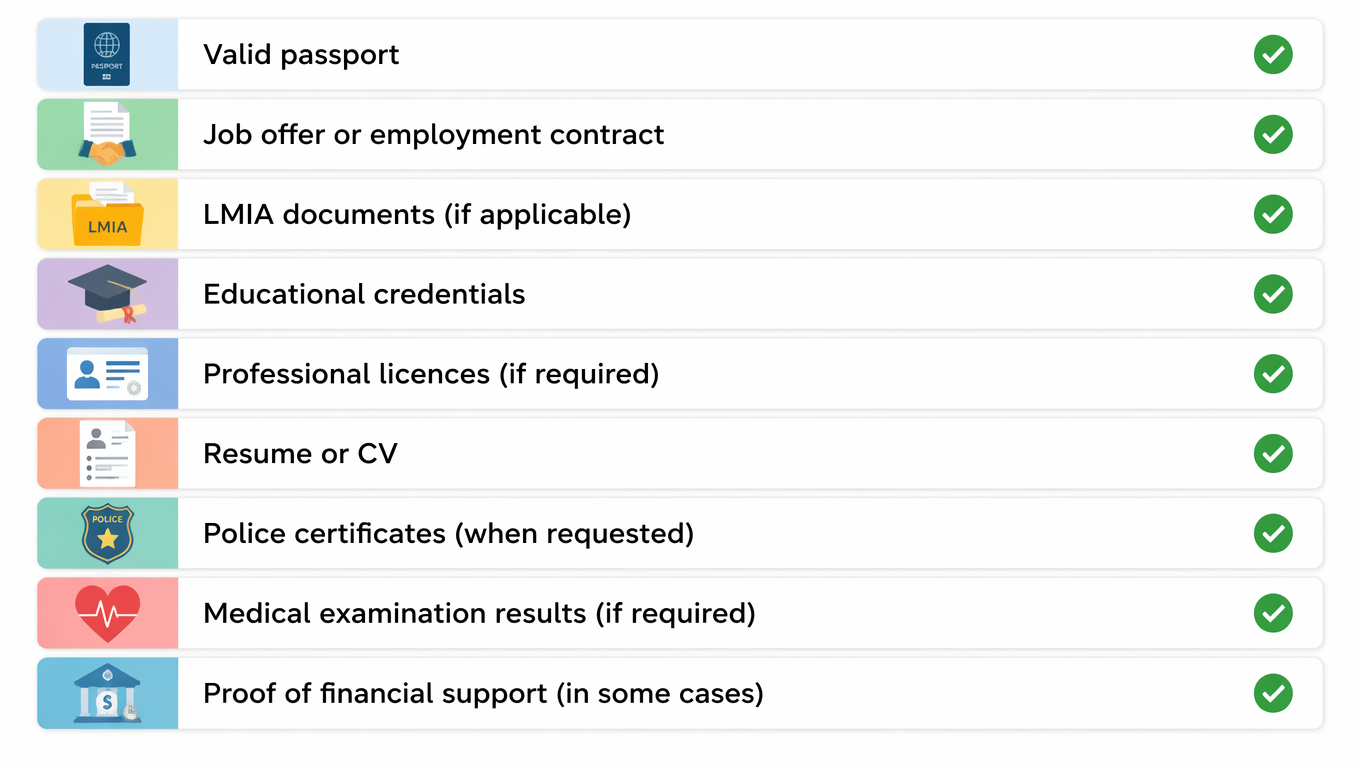
Although document requirements vary depending on your situation, applicants commonly prepare:
Valid passport
Job offer or employment contract
LMIA documents (if applicable)
Educational credentials
Professional licences (if required)
Resume or CV
Police certificates (when requested)
Medical examination results (if required)
Proof of financial support (in some cases)
Providing complete and accurate documentation can help avoid unnecessary processing delays.
Step 4: Submit Your Work Permit Application
Most applicants outside Canada submit their application online through Immigration, Refugees and Citizenship Canada (IRCC).
After applying, you may be asked to:
Provide biometrics (fingerprints and photo)
Attend a medical examination
Submit additional supporting documents if requested by IRCC
Processing times vary depending on your country of residence, the work permit program, and application volume.
Step 5: Receive Your Decision
If your application is approved, you'll receive instructions regarding your authorization to travel to Canada and, if applicable, when your work permit will be issued.
Before travelling, carefully review the conditions attached to your permit, including:
Employer
Occupation
Work location
Expiry date
Any additional restrictions
Step 6: Prepare for Life in Canada
Receiving a work permit is only the beginning.
Before departure, it's helpful to prepare for:
Finding housing
Opening a Canadian bank account
Applying for a Social Insurance Number (SIN)
Understanding healthcare eligibility
Learning workplace culture
Improving English communication skills
Taking time to prepare can make your transition to Canada much smoother.
Common Mistakes to Avoid
Many work permit applications are delayed because of avoidable errors.
Common mistakes include:
Applying under the wrong work permit category
Missing required supporting documents
Providing inconsistent information
Assuming every job offer qualifies for a work permit
Relying on outdated immigration information found on social media
Always refer to the latest IRCC requirements before submitting your application.
Frequently Asked Questions
Can I apply for a Canadian work permit without a job offer?
Usually, no. Most applicants require a job offer for an employer-specific work permit. Open work permits are available only to eligible individuals under specific programs.
Can my family come with me?
Depending on your circumstances, your spouse or common-law partner and dependent children may also be eligible to accompany you. Some spouses may qualify for an open work permit, while children may be eligible for study permits or visitor status.
Can a work permit lead to permanent residence?
A temporary work permit does not automatically result in permanent residence. However, Canadian work experience may strengthen eligibility under certain immigration pathways, depending on the program and the applicant's circumstances.

Final Thoughts
Working in Canada can open the door to valuable international experience, career advancement, and potential long-term immigration opportunities. Understanding the work permit process before applying can help reduce delays and improve your overall preparation.
Because every applicant's situation is unique, it's important to evaluate your eligibility carefully and ensure your application is complete and accurate. Professional guidance can help you better understand your options and navigate Canada's evolving immigration system with confidence.
If you are planning to work in Canada, the team at Alfie Immigration is ready to support you every step of the way. We can assess your eligibility, answer your questions, and guide you through the entire Work Permit application process. Contact us today to receive personalized advice tailored to your unique situation.
